#871 Pinephone mainboard v1.1 and EG25-G

Found a Pine64 PINEPHONE : BRAVEHEART EDITION Main Board for $126 USD.
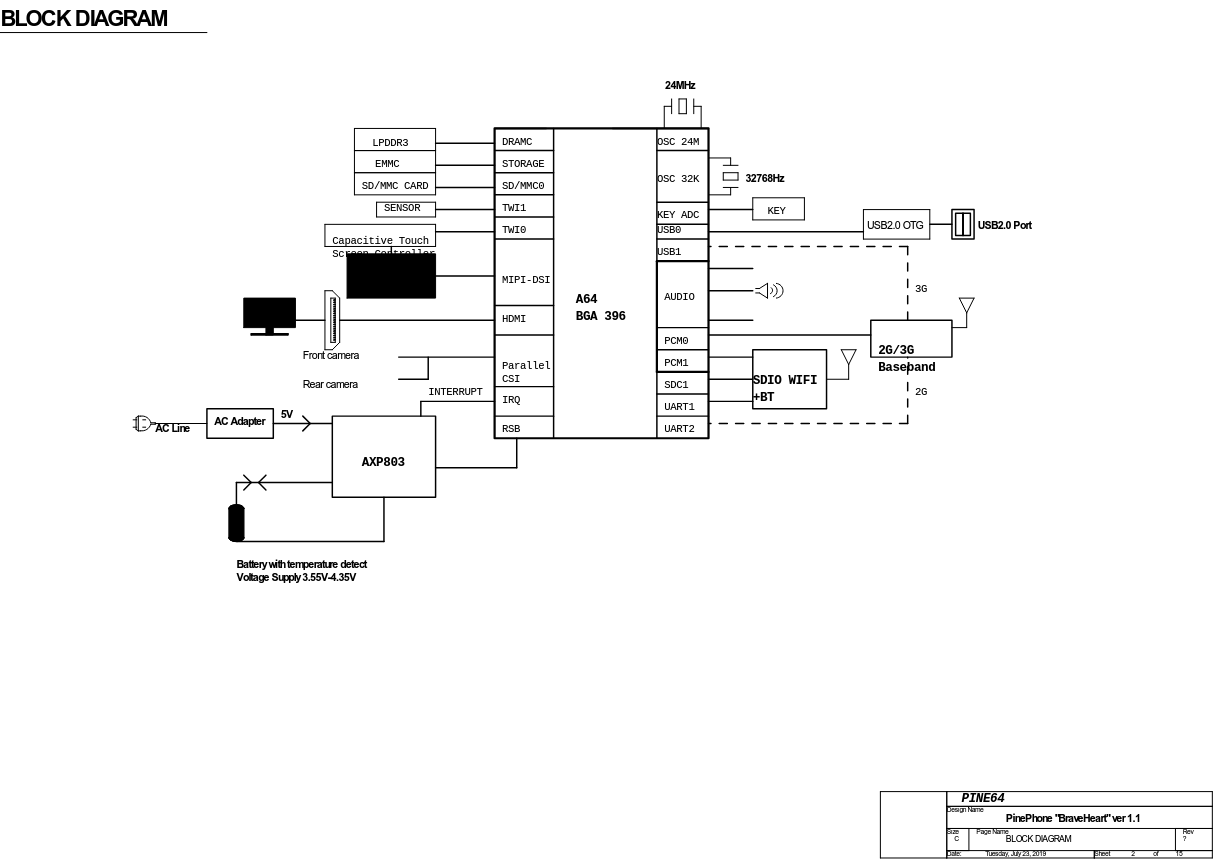
Looking at the schematic, it exposes antenna, power and USB, and I assume a UART. Are these enough to get rayhunter going on the main board itself?
Would any Quectel EG25-G LTE module connected to a microcontroller that exposes a UART also work?
1
Interesting find! The PinePhone Braveheart mainboard v1.1 should work for rayhunter, since the EG25-G modem is exactly what rayhunter already targets on the PinePhone. Here’s the breakdown:
What Rayhunter Needs
Rayhunter communicates with the Quectel EG25-G modem via QMI (Qualcomm MSM Interface) over USB. The key requirements are:
libqmior direct QMI accessPinePhone Mainboard Approach
On the PinePhone mainboard v1.1, the EG25-G is connected via:
/dev/ttyUSB2typically)If you’re running the mainboard standalone (without the LCD/battery/etc.), you’d need:
The simplest approach:
Standalone EG25-G Module
Yes, any Quectel EG25-G module would also work, but with more effort:
The UART-only approach would be more limited — rayhunter primarily uses QMI for the deep DIAG/diagnostic interface that captures the signaling messages (attach requests, authentication, etc.). AT commands alone won’t give you the low-level NAS/RRC messages that rayhunter analyzes for stingray detection.
Cost-Effective Alternative
If the $126 PinePhone mainboard is mainly for the EG25-G modem, you can get standalone EG25-G Mini PCIe modules for ~$25-35 on AliExpress and use them with any Linux SBC + USB adapter. But the PinePhone mainboard gives you an all-in-one solution with known-good rayhunter compatibility.